


With the 2026 FIFA World Cup fast approaching, football is preparing for a new era. The sport’s lawmakers have approved some significant rule adjustments designed to speed up the game, discourage time-wasting, and give match officials greater control over key moments.
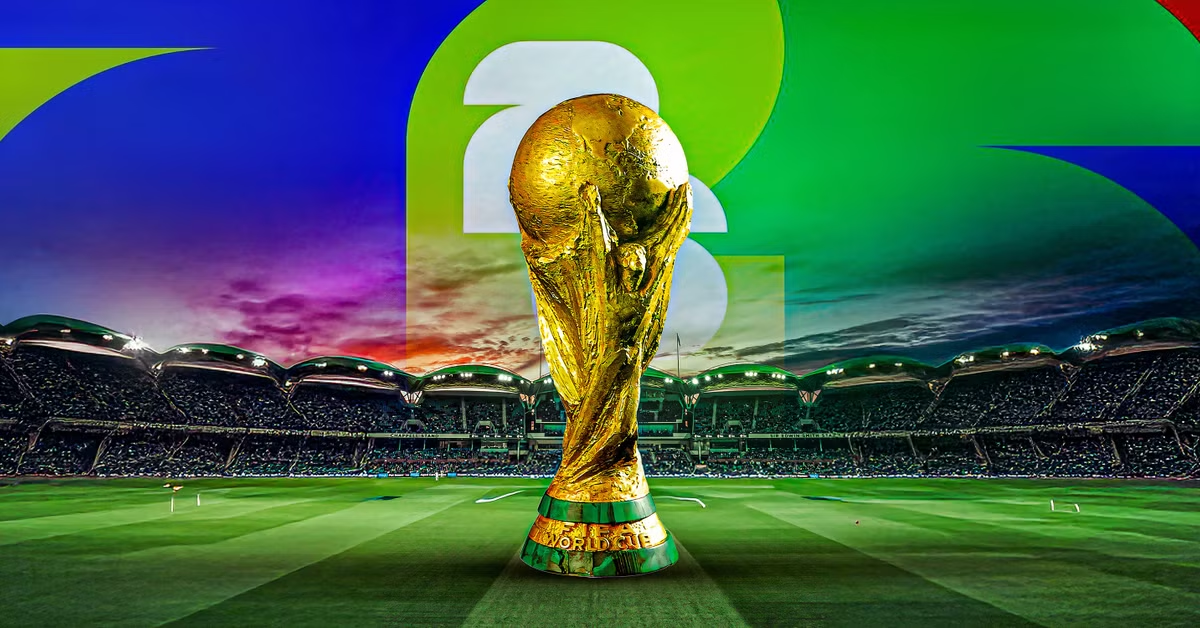
The tournament, which will be jointly hosted by the United States, Canada, and Mexico, will be the first major international competition where these regulations are expected to take center stage.
From stricter substitution procedures to new measures targeting delays in restarting play, teams will need to adapt quickly to avoid costly mistakes.
FIFA believes the changes will improve the overall spectacle, creating a faster and more engaging experience for supporters while helping referees manage matches more effectively. As the football world counts down to kick-off, these are some of the key rule updates that could influence the tournament.
-
Throw-ins Under the Clock
Players will no longer be allowed to take excessive time over throw-ins. A five-second countdown will be enforced, and any deliberate attempt to delay the restart could result in possession being handed to the opposing team.
-
Goal-Kicks Face Similar Restrictions
Time-wasting during goal-kicks will also come under greater scrutiny. Goalkeepers or defenders who intentionally delay putting the ball back into play could see their team punished with a corner kick awarded to the opposition.
-
Faster Substitutions Required
One of the most notable changes concerns substitutions. Players being replaced will have just 10 seconds to leave the pitch using the nearest exit point.
Failure to comply carries a significant penalty. The incoming substitute will be prevented from entering the field for at least one minute, forcing the team to continue temporarily with only 10 players.
-
New Off-Field Treatment Rule
Players who receive medical treatment from team physios will generally be required to remain off the pitch for 60 seconds before returning to action.
Certain exceptions will apply, including cases involving goalkeepers, serious injuries, or incidents where an opponent receives a yellow or red card.
-
Tougher Stance on Confrontations
Officials will also be paying closer attention to player behaviour during heated exchanges. Any player who deliberately covers their mouth while engaging in a confrontational situation with an opponent may face serious disciplinary action, including the possibility of a red card.
-
VAR and Second Yellow Cards
A new adjustment will allow the second yellow card leading to a dismissal to be reviewed after a player has been sent off.
However, VAR will not be used to determine whether a player should receive a second caution in the first place. The referee’s decision on issuing the booking remains final.
-
Corner-Kick Decisions Can Be Checked
Video Assistant Referees will now have the authority to quickly verify whether a corner kick has been awarded correctly before play restarts.
The measure is intended to reduce obvious errors in crucial situations, although it will not apply to goal-kick decisions that may have been incorrectly awarded.
-
A New Look for Football’s Biggest Stage
Collectively, the changes represent one of the most significant tweaks to football’s laws in recent years. While some rules specifically target time-wasting, others focus on improving fairness and ensuring that matches flow more smoothly.
With the 2026 World Cup set to attract billions of viewers worldwide, players, coaches, and fans will soon get their first major glimpse of how these new regulations shape the game on football’s grandest stage.