


With Nigeria’s Independence Day around the corner, Spotify has dropped its 2025 list of the most-streamed Afrobeats artists and songs worldwide, and the results reflect just how far the sound has traveled.
Released on September 29, 2025, the rankings mostly highlight familiar names, though they also raise fresh questions about what really counts as “Afrobeats.”
Burna Boy Still at the Top
Burna Boy might continue to resist the Afrobeats label, but numbers don’t lie. The Grammy winner sits comfortably at No. 1 on Spotify’s global chart of most-streamed Afrobeats artists this year.
Right behind him is Rema, whose non-stop stream of singles and the enduring dominance of his global smash Calm Down keep him in second place.
Wizkid takes third, proving that 2025 has been very much his year. A collaborative streak and a string of chart-topping features have carried him into the top three.
Fourth place belongs to Asake, whose consistency with singles, plus collaborations with Young Jonn and Olamide, have bolstered his already rich catalogue.
The only woman in the mix is Ayra Starr, who seals the top five. The Grammy-nominated star’s Hot Body has been one of Afrobeats’ strongest exports this year.
2025 Top Afrobeats Artists on Spotify:
1. @wizkidayo
2. @heisrema
3. @burnaboy
4. @asakemusik
5. @ayrastarr pic.twitter.com/3Xgu90zvWC— ChaftsAfrica📈 (@ChaftsAfrica) September 29, 2025
Most-Streamed Afrobeats Songs of 2025
While the artist list feels expected, the songs’ ranking tells a different story and one that fans may find contentious.
At No. 1 is Santa by Jamaican producer Rvssian featuring Puerto Rican star Rauw Alejandro and Ayra Starr. Though it appears on Ayra’s sophomore album The Year I Turned 21, its sound leans far more toward Latin Pop than Afrobeats.
Second is Shake It To The Max by Ghanaian act Moliy, another track that carries more Dancehall DNA than Afrobeats rhythm.
Afrobeats finally makes a solid claim at No. 3 with Rema’s Calm Down remix featuring Selena Gomez, which continues to do global damage long after its release.
Fourth on the list is We Pray by Coldplay, with Burna Boy, Elyanna, Little Simz, and TINI. Its classification as Afrobeats has raised eyebrows since the track leans heavily into electronic pop rather than the genre’s traditional style.
Rounding out the top five is People by Cameroonian-American singer Libianca. The Afro-R&B anthem still resonates deeply with listeners worldwide.

New Frontiers for Afrobeats in 2025
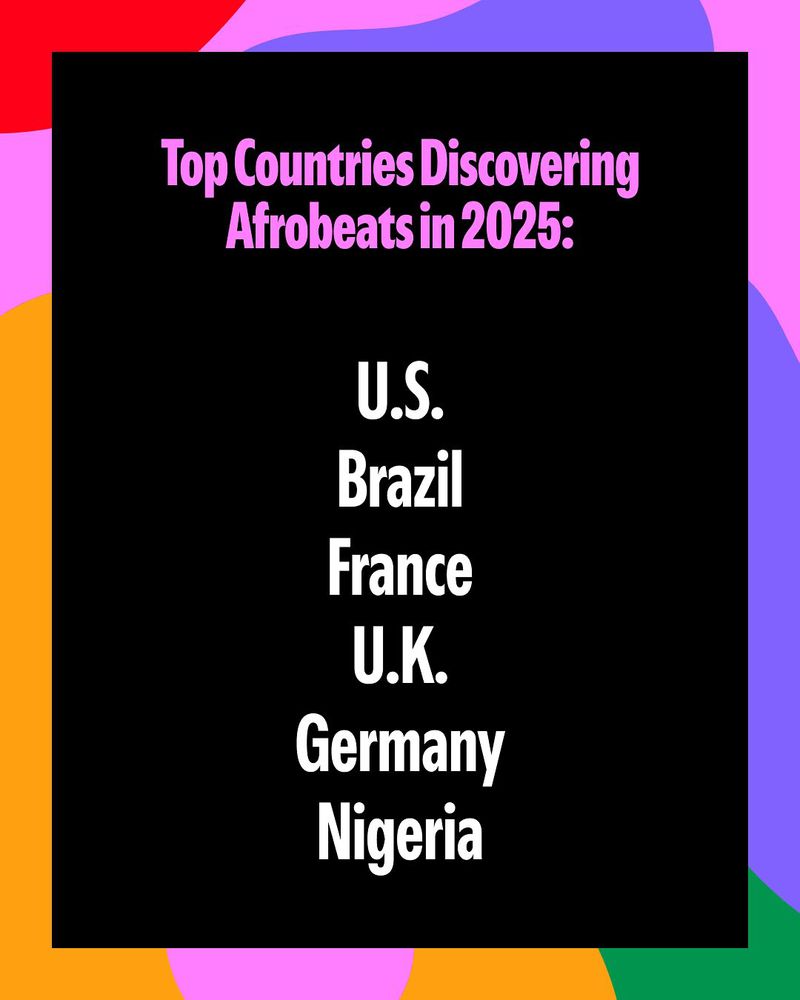
Spotify also revealed where Afrobeats is gaining new listeners, and the United States leads the charge. From arena shows to award stages, the genre’s popularity in the U.S. is undeniable.
Brazil follows closely, with its cultural links to Yoruba traditions offering fertile ground for Afrobeats to thrive. France comes in third, boosted by frequent collaborations between Nigerian stars and French heavyweights like Dadju, Tay C, and Tiakola.
The U.K., long a hub for Afrobeats’ international spread, is fourth, while Germany takes fifth as more Europeans tap into the sound.
Nigeria itself ranks sixth, reflecting the rapid growth of Spotify’s user base in the country as more locals engage with Afrobeats directly on the platform.
A Global Sound With a Shifting Identity
While the numbers confirm Afrobeats’ continued global rise, the debate lingers: what truly defines the genre? With tracks leaning into Latin Pop, Dancehall, and electronic influences cutting, Spotify’s list shows just how fluid the label has become in 2025.
View this post on Instagram